
Custom Healthcare Website Design for Mental Health Clinic with Rapid SEO Success and Professional Clinical Aesthetics
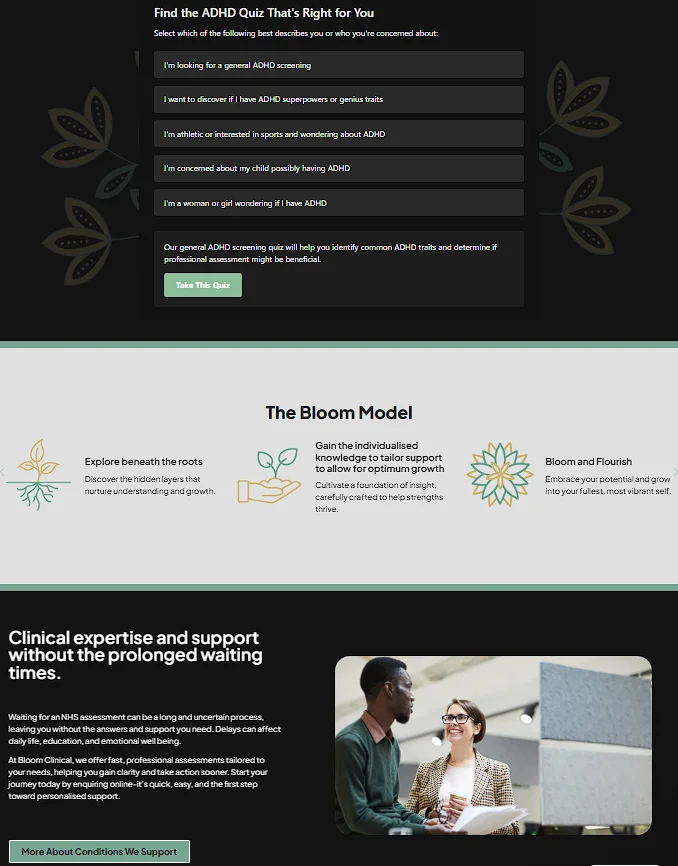
Developed bespoke website specifically for mental health and therapy services, incorporating healthcare industry design principles including patient focused navigation, clear service explanations, therapist credentials, privacy assurances, and calming aesthetics essential for clinical websites where trust, professionalism, and confidentiality are paramount for patients seeking mental health support across the UK.
Implemented strategic technical SEO and targeted keyword optimisation delivering page one Google rankings for primary mental health keywords, therapy specific searches, and clinical service terms within 30 days of website launch demonstrating rapid search visibility when SEO foundations are built correctly from day one rather than retrofitted afterwards.
Created intuitive user experience with clear pathways to booking, crisis resources, service information, and therapist profiles reducing barriers to accessing mental health support whilst ensuring GDPR compliance, confidentiality messaging, and accessible design meeting healthcare accessibility standards for vulnerable patient populations requiring clinical mental health services.
Bloom Clinical needed a professional website to establish their mental health clinic’s digital presence. As a new clinical practice offering therapy and mental health services, they required a website that would immediately rank for local searches whilst building patient trust and confidence.
Critical requirements:
Mental health websites require unique considerations—patients are often vulnerable, privacy-concerned, and need clear reassurance about confidentiality and professional qualifications. The website needed to balance clinical professionalism with approachability and warmth.
We built Bloom Clinical a custom mental health clinic website with SEO foundations integrated from day one—delivering both immediate search visibility and long-term patient acquisition.
We created a bespoke design specifically for mental health services, incorporating healthcare best practices and patient-centred principles.
Healthcare Design Elements:
Patient Journey Optimisation:
Rather than building a website and adding SEO later, we integrated comprehensive SEO strategy from the foundation—delivering rapid ranking success.
SEO Strategy Delivering First-Month Results:
First Month Results:
Page one rankings – Main keywords ranking page one within 30 days
Local map visibility – Appearing in Google Maps for mental health searches
Organic patient enquiries – Immediate traffic converting to appointment bookings
Competitive positioning – Outranking established clinics with older websites
Why Results Came So Quickly: Building SEO into the website architecture from day one, rather than retrofitting later, delivered immediate ranking success. Technical foundations, strategic keyword targeting, and proper local SEO implementation meant Google could immediately understand, trust, and rank the site.
Rapid ranking success came from building SEO into the website foundation rather than adding it afterwards. For Bloom Clinical, we: implemented technical SEO from day one (lightning-fast loading speeds, mobile-first responsive design, clean code structure), strategically targeted lower-competition local keywords with high patient intent (“mental health clinic [city]” rather than just “therapy”), created comprehensive service-specific pages with keyword-optimised content before launch, set up and fully optimised Google Business Profile immediately, implemented proper schema markup for medical practices, and built topical authority through quality mental health content. Most websites rank slowly because SEO is retrofitted after launch—building it into the architecture from the start delivers immediate results. The first month rankings proved our strategic approach works.
Mental health websites require unique considerations due to patient vulnerability and privacy concerns. For Bloom Clinical, we focused on: building immediate trust through clear confidentiality and GDPR compliance messaging, displaying therapist credentials prominently (patients need reassurance about professional qualifications), using calming therapeutic colour psychology rather than corporate aesthetics, ensuring accessibility for patients with disabilities (WCAG compliance), providing clear crisis resources and emergency contacts, using sensitive language appropriate for vulnerable populations, balancing professional clinical credibility with warmth and approachability, and creating intuitive patient journeys removing barriers to accessing care. Mental health patients often feel anxious about reaching out—websites must reduce friction, build trust immediately, and communicate safety and confidentiality clearly. Generic business website approaches fail to address these healthcare-specific needs.
Healthcare SEO can rank quickly when done strategically from the start. Bloom Clinical’s first-month page one rankings prove this. The key is, targeting realistic keyword combinations rather than impossible terms, building technical foundations correctly from launch, creating comprehensive service specific content, implementing technical methods for medical practices, optimising Google Business Profile for local searches, and focusing on high intent keywords. Many healthcare sites rank slowly because they use generic SEO approaches or templates with poor technical foundations. Healthcare specific SEO understanding combined with proper technical implementation delivers faster results. However, realistic expectations matter we targeted achievable keywords first, then build authority for more competitive terms over time. Quick wins are absolutely possible with correct strategy.
Yes, healthcare websites have specific legal and ethical requirements. For Bloom Clinical, we ensured: GDPR compliance with clear privacy policies and data handling transparency, confidentiality messaging reassuring patients about therapy privacy, professional credentials and qualifications displayed (required for clinical credibility), accessibility compliance (WCAG standards ensuring disabled patients can access information), appropriate disclaimers about emergency situations, secure contact forms and booking systems protecting patient data, and ethical marketing language appropriate for vulnerable populations. We avoid guaranteeing treatment outcomes (ethically inappropriate for mental health), ensure all claims are evidence-based, and follow advertising standards for healthcare services. Mental health marketing regulations are stricter than general business websites must balance marketing effectiveness with ethical professional standards and patient protection.
Both serve different purposes, but custom websites provide far better long-term value. Directory listings (Psychology Today, Counselling Directory) offer initial visibility but: charge ongoing fees, provide no brand control, limit how you present services, don’t build your own SEO authority, and keep patient data with the platform. For Bloom Clinical, a custom website delivers: complete brand control and professional presentation, SEO authority that compounds over time, ownership of patient data for marketing, zero ongoing directory fees, ability to showcase multiple therapists and services comprehensively, and long-term asset value. Directories work for immediate visibility when starting, but custom websites with proper SEO (like Bloom Clinical achieving page one in one month) quickly outperform directories whilst building owned assets. Most successful practices use both initially, then transition to primarily their own website as SEO matures.